Showing posts with label favorite books. Show all posts

Wednesday, September 28, 2016

How Many Have You Read

The NPR has a list of the best ever teen books set up as a checklist so you can check off how many you've read. It's HERE. Give it a try and see how many you've read (Eleven for me). Do you agree with the list? What is missing from it?

It would be nice if they had a similar list for inspirational or Christian books. 

Here's what I've read from this list. This is not saying I recommend them. You can read my review of them in earlier posts

Harry Potter: The Order of the Phoenix (just finished this week)

The Hunger Games
Review HERE

The Fault in Our Stars
Review HERE

The Book Thief

The Giver

The Outsiders I was really bored!

Divergent

13 Reasons Why
Review HERE

The Dark is Rising

Forever

Just Listen

If I Stay


I think I've seen more as movies than what I read. I watched these as movies:
The Hunger Games
The Fault in Our Stars
Fahrenheit 451
The Book Thief 
The Giver
The Perks of Being a Wall Flowers
Paper Towns
Twilight
The Sisterhood of the Traveling Pants
The Dark is Rising
If I Stay
The Maze Runner


Other YA Novels I've reviewed are:
All the Bright Places
City of Ember
I Was Here
This is How I Find Her
The Boy in Striped Pajamas
The Summer I Saved the World in 65 Days
Counting by 7's


Monday, May 23, 2016

Summer Reading for Upper Elementary and Middle School

A while back I posted a summer reading list for middle schoolers. Those were secular books. Below is a list of Christian books for upper elementary and middle schoolers. Check amazon or Christian books to find out which would be the best for you.

Try to read at least one book a month this summer.

Fiction:


Horse Dreams, Dandi Daley Mackall


Vanished, Kristi Holl


True Friends, Stephanie Perry Moore


The Lion, The Witch and the Wardrobe
The Voyage of the Dawn Treader
The Boy and His Horse, C.S. Lewis


Dragons in Our Midst, Bryan Davis


author interview Here


Girls Only Series, Beverly Lewis


Grandma's Attic Series, Arleta Richardson


Here's Lily, Nancy Rue


Asking for Trouble, Sandra Byrd


Mandie Series, Lois Gladys Leppard


Heart to Heart, Sandra Byrd


Sophie's World, Nancy Rue

Just Claire, Jean Ann Williams
author interview HERE
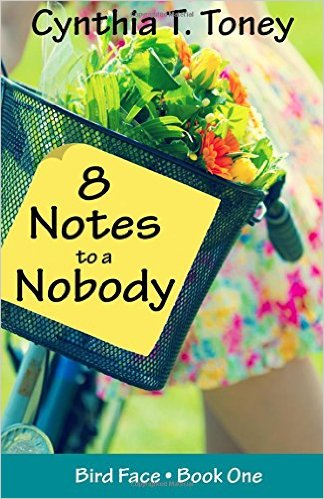
8 Notes to a Nobody, Cynthia Toney
author interview HERE


There You'll Find Me,  Jenny B Jones
Review HERE


Bash and the Pirate Pig, Burton Cole

Hear No Evil, Mary Hamilton


Landon Snow and the Auctor’s Riddle,    RK Mortenson

On the Scene,  Robin Caroll    


Anything But Normal, Melody Carlson                                               

One Realm Beyond, Donita K. Paul

The Door Within, Wayne Thomas Batson


Non Fiction:

The Christian Girl's Guide to Me: The Quiz Book, Katrina Cassel


Everyone Tells Me to be Myself But I Don't Know Who I Am, Nancy Rue


A Girl After God's Own Heart, Elizabeth George


A Girl's Guide to Best Friends and Mean Girls, Dannah Gresh


A Girl's Guide to Making Really Good Choices, Elizabeth George


Heaven for Kids, Randy Alcorn


The Middle School Survival Manual, Katrina Cassel


My Mini Dream Room, Karen Whiting


A Boy After God's Own Heart, Jim George


A Young Man's Guide to Making Right Choices, Jim George


This list is very incomplete. If there are books you think should be one it, please list them in the comment section.


Have you been assigned summer reading by your school? If so, what are you reading?

Whenever possible, shop at your local Christian bookstore.

Wednesday, February 3, 2016

Book Review: The Fault in Our Stars

Jasmine and I first watched the movie The Fault in Our Stars. Then we listened to it on CD.


The basic story:


From IMBD
"Hazel and Augustus are two teenagers who share an acerbic wit, a disdain for the conventional, and a love that sweeps them on a journey. Their relationship is all the more miraculous, given that Hazel's other constant companion is an oxygen tank, Gus jokes about his prosthetic leg, and they meet and fall in love at a cancer support group." 

Hazel Grace Lancaster, a 17-year-old with cancer, reluctantly visits a cancer support group at her mother's insistence. Her trusty portable oxygen tank goes with her. At the meeting she meets August Waters, a teen with one leg and a unique outlook on life. The two hit it off, and Hazel shares her favorite book, An Imperial Affliction with Augustus. He in turn gives her his favorite book to read--The Price of Dawn, a shoot 'em up book with a high body count.


Hazel shares that An Imperial Afflication is the only novel about cancer that describes her own life. She is frustrating that author, Peter Van Houten, ends the novel mid sentence denying the readers closure.


Since she used up the special wish granted to terminally ill children to visit Disney when she was 12, Augustus uses his wish to take himself  and Hazel to Amsterdam to meet the author of An Imperial Afflication. When the meeting is less than stellar, Augustus refuses to let Hazel think she wasted his trip.


Once home, things take a turn for the worse for Augustus whose cancer has returned. And we find out, as Augusts says, "Life in not a wish granting factory." 


There are a lot of differences between the movie and the book. One of the biggest ones is that in the movie, while you get to see what a miserable excuse for a human author Peter Van Houten is, in the book you find out that the main character in his book was named for his daughter who died of cancer when she was 8. The book was an attempt reconcile himself with her death.


The book gives more backstory and insight to the main characters' motivations and thoughts, but it also has much more crude language and swearing than the movie.


Because they say it better than I do, I am including some of Plugged In Online's review. It's long, but it's worth reading. You can read the whole thing HERE

POSITIVE ELEMENTS

Death hangs over The Fault in Our Stars like the stars themselves, permeating every character and every interaction. And yet in the midst of mortality we see at least a sliver of something alive. Even in pain, hope can be found, we're told. Even in disappointment, meaning comes.
Loving someone, truly, through severe sickness, isn't easy. We see others fail under the pressure. But no matter what circumstances bring, Gus and Hazel care for each other throughout, often giving something of themselves in the process.
They're both heroic characters in their own ways, facing disease and circumstance with as much grace and courage as they can muster. Hazel's last few years have been something of a living sacrifice as she tries to cushion the blow of the inevitable pain that's coming for her parents. Gus wants to live a life of meaning—one filled with adventure and importance, so that when he does go, he's known and loved by millions.
There's a little merit in both of those strategies. But when Gus and Hazel get together, they get a better sense of what the beauty of life is really about. Hazel moves beyond responsibility and finds joy in her difficult life. And when she learns that, should she die, her parents won't die with her, that they're making plans for a life without her, she treats it as the best of gifts: the idea that she won't necessarily destroy everyone around her. And Gus, through Hazel, comes to understand that it's not so critical to be loved by throngs, as long as you've loved by and have changed the lives of a few. Or even just one.
Hazel finds solace while visiting the house of Anne Frank, the diary-writing Jewish girl killed in the Nazi Holocaust. "Where there is hope, there is life," we hear Anne's words playing in the background. "Think of all the beauty in everything around you. And be happy."
Unlike most teenage love stories, parents come across pretty well here. While Hazel and her folks have their moments of tension, there's no question about how much they love one another.

SPIRITUAL CONTENT

Hazel's support group takes place in the basement of an Episcopal church and is led by a cancer survivor who's a fervent—and, in Hazel's eyes, goofy—Christian. He sings a song that includes the words, "Christ is your friend and He'll be there to the end." And he rolls out a carpet depicting the Savior, telling participants standing on it that they're "literally in the heart of Jesus." As the story proceeds, then, the idea of literally being in the heart of Jesus, when they're literally in a church basement, is sometimes mocked.
Christianity is treated more reverentially during a funeral, wherein a priest reads Psalm 23 and people say a prayer. (Still, a much-loathed antagonist crashes the funeral and lets loose a quip about having to "fake pray.")
Both Hazel and Gus think a lot about what might come after death. Gus fears oblivion in this life while hanging on to a belief in at least some sort of afterlife, saying he wants to crash his own funeral as a ghost. Hazel's more cynical, telling Gus she doesn't believe in angels but she may believe in God, and while she'd like to believe in an afterlife she'd need more proof first. Someone suggests that her life has no meaning and her disease is a "failed experiment in mutation."

SEXUAL CONTENT

Eighteen-year-old Gus and 17-year-old Hazel are attracted to each other from the beginning. And while Hazel tries to keep him at arm's length for a while, their platonic relationship goes kablooey in Amsterdam. The two share a tender kiss in Anne Frank's house. Then they tumble into Gus' hotel room and have sex.
The scene shows Hazel and Gus taking off each other's shirts, and she undoes her bra. (We see her from the back.) They caress and kiss as they give in to their passion. Afterwards, both are seen mostly naked, with the sheet covering only the most critical body parts. And it's worth noting that much is made of Gus' previously virginal "condition" ... and that this union is seen as the perfect end to it. The couple cuddles and kisses elsewhere.
Gus' friend Isaac makes out with his girlfriend in a parking lot, and we see him kneading her (clothed) breast. Later, Isaac, who has lost both eyes to cancer, comments on the size of another girl's breasts. "I'm blind, but I'm not that blind," he says.

CRUDE OR PROFANE LANGUAGE

One very forceful f-word is used as a sexually derived insult. Also, a half-dozen s-words and a smattering of other bad words, including "a‑‑," "b‑‑ch," "b‑‑tard" and "h‑‑‑." God's name is used as an expletive about 30 times, twice paired with "d‑‑n."

CONCLUSION

"Apparently, the world is not a wish-granting factory," Gus says sadly.
It's a truth we all know. Even we Christians, whom the movie portrays as fairly naive, see that all too well. We wish it was. We want our happily ever after endings. But we know that happiness on earth is fickle and fleeting.
In The Fault in Our Stars (based on John Green's best-selling young adult novel) we find, indeed, that the stars haven't been especially kind to these two lovers. They don't have the time we'd wish for them—time to get jobs and have kids, to grow up and grow old. They've been given a finite number of days together—and even those days are filled with the looming problems and anxiety that cancer inevitably brings. And whenever it seems like something wonderful might finally happen, it goes awry. Each star they cling to, including each other, has a fault inside—a scratch, a split.
But even given such faulty stars, the two find joy and fulfillment. They have each other. They're loved. They live. Yes, maybe their days are built on borrowed time, but it's better than no time, and Hazel confesses that she's "grateful for our little infinity."
"You don't get to choose if you get hurt in this world," Hazel says. "but you do get to choose who hurts you." That's a strangely powerful statement, I think.
Sadly, one fault Hazel and Gus share is that they don't always make the wisest of choices. They sleep together. And they prefer to see themselves as pawns of the stars, not beloved by those stars' Creator.
This isn't an anti-Christian film, exactly—just spiritually uncertain. Nor is it saturated in sex or depravity. This isn't a bad movie, really. In many ways, it's quite good.
But here's the thing: Because it is quite good—a persuasive, emotional story with strong, positive messages about sacrifice, hard truths and true love—the bad stuff can come off as more persuasive than usual. It's harder to see a loving God yourself when the characters you grow to care about can't, or won't. It's harder to object to premarital sex while weepily watching Hazel and Gus—teens who might never get the chance to ever have sex again—get so much pleasure and fulfillment from it.
The Fault in Our Stars is, I suppose, a little like its title. For all its sparkly power, it has scratches and splits. We know immediately when a movie like Noah drifts away from its moorings. But it's hard to see a film with crystal-clear eyes when you're always dabbing them with a Kleenex.

My final thoughts are these: It's a good story which I would have enjoyed a lot more if there had been less crude and profane language. If there is one thing John Green excels at in his books it is telling a true to life story with an abundance of insight and crude language. I think it would have been more powerful if it had a stronger spiritual emphasis--hope of heaven. But it is not a Christian book. 


I would proceed with caution when reading the book or watching the movie. I wouldn't recommend it for anyway under 13 or 14 years old.

My challenge to myself and other Christian authors is to write books that are equally insightful and engaging, but which also provide spiritual guidance and insights. We need more books that weave in faith elements without cramming it down the reader's throats. A book should have an engaging story, not a thinly disguised sermon. It should offer hope to the reader and send them on a God search. Let's build up the CBA market with books that are as widely read as The Fault in Our Stars and the others I've reviewed on this blog.
Be genuine
Be real
Be connected
Write your best story

These are my thoughts. Feel free to add yours in the comment section.
Some of the fun of The Fault in Our Stars was Gus and Hazel's quotes. Who can forget:


Favorite quotes HERE

Read my other reviews
All the Bright Places
13 Reasons Why
The Hunger Games (Bryan Davis)

Saturday, January 23, 2016

Book Review: The Hunger Games

The following review of The Hunger Games was written by author Bryan Davis. After you read the interview, leave a comment in the comment section--do you agree with all, some or none of his review of the book? Why?

Bryan has written several best selling young adult fantasy books. You can read his interview HERE. This review is being used with his permission. He also has a review of the movie, which I will be posting soon. 


 The Hunger Games is a dystopian/science fiction novel targeted for young adult readers. Since the genre is the same as my daughter’s novel, and since it is so popular and highly acclaimed, I decided to read it while flying home from Singapore.

First, I will list some of the good qualities. The Hunger Games accomplished two important feats – it held my interest throughout and kept me thinking about the story and characters after I closed the book. This doesn’t often happen to me, so I consider this to be a strong quality. If a story can’t hold my interest, I simply don’t finish. I don’t have time to read a boring book.

The author developed the main character (Katniss) quite well. Her traits (with one exception) were clear and consistent. For the most part, she was likeable and easy to follow. I will get to the exception soon.

The level of action, for the most part, proceeded at a good pace with appropriate pauses for rest and reflection. The author used foreshadowing quite well, better than most.

Now I will list some negatives. The first I noticed was the use of present tense. I found it annoying and unnecessary. It constantly jerked me out of the story, and I never got used to it.

The author’s use of fragments in narrative was also annoying. I understand the need for fragments in dialog and interior monolog, but it is simply wrong in narrative. It is a gimmick that has become popular of late, and it doesn’t work. There were many times that a comma would have made a proper sentence, and the use of a period instead had no reasonable explanation. Every use jerked me out of the story, and such jarring is so easily avoidable.

For example (page 6 in my copy):

"In the autumn, a few brave souls sneak into the woods to harvest apples. But always in sight of the Meadow. Always close enough to run back to the safety of District 12 if trouble arises."

The second two "sentences" are not sentences at all. If the author had put commas after "apples" and "Meadow" instead of periods, the entire section would have been grammatically correct. There is no reason to use periods except for employing a gimmick that doesn't work.

This example also points out how the use of present tense has problems. "In the autumn" indicates a time that differs from the present, but the section is still written in the present tense, which doesn't make sense at all.

On another point, the author was inexplicably inconsistent with speaker tag placements—sometimes near the beginning of a dialog segment, sometimes in the middle, sometimes at the end. It was especially distracting when she placed a speaker tag at the end of a several-sentence paragraph, and I found that the speaker wasn’t who I thought it was. When the speaker isn’t obvious, it is always better to put the tag as near to the beginning of the spoken portion as possible. The other option is to identify the speaker with an action beat at the beginning. If the speaker is obvious, there is no need for a tag at all.

The author did a poor job with scene-setting descriptions. I am a minimalist with descriptions in my own work, but I strive to provide enough to set the scene. Ms. Collins describes almost nothing. I could rarely see the places at all, and there were plenty of places to set the scenes unobtrusively. The arena was barely visible. What did the hovercraft look like? The training facility? I didn’t realize the size of the cornucopia until they climbed onto it at the end. Practically nothing was described sufficiently.

***Caution, spoilers ahead

The author did a poor job with world building. The motivations for the games themselves were lacking. Sure, I understood the punishment and warning angle, but she didn’t provide any counterbalance to explain if the citizens debated refusal to cooperate. If they did, what was their reason for not rebelling? Annihilation was threatened, but it was an empty threat. They leaders couldn’t afford to annihilate everyone. Some of these issues lacked sufficient exploration. Also, many of the technology aspects had little to no explanation. Where did the silver parachutes originate? How could they be delivered without notice? How could they fall so precisely, like in the crook of the tree where Katniss slept? How could there be cameras wherever they went, no matter where they went, all without notice? Explaining some of these issues is a huge part of world building. These were a big part of the story, so I got the impression that the author had no idea how to explain them, or just didn’t want to bother. Also, if the technology was that advanced, why did they need a train to get to the training facility? Much of this felt like the author was simply pulling a rabbit out of a hat.

The romantic angle seemed very contrived. Although Katniss was a well-developed character for the most part, when it came to her relationship with Peeta, she became a shallow drone. With most of the story, she was smart and strong, but she was clueless when it came to understanding what Peeta was doing. I suppose that every reader in the world knew what Peeta was doing, but Katniss was too stupid to figure it out, which created a situation that ruined suspension of disbelief. Katniss was too smart most of the time to be that stupid regarding Peeta. I get the impression that the author just tossed the romance into the mix in order to titillate readers, especially the ridiculous kissing parts, but it doesn’t work at all. In fact, this is the biggest flaw in the story and makes me unable to recommend it to anyone. The romance was completely unnecessary to the point of being silly.

Another story flaw is the author’s decision to create a midstream rules change that allows for two winners from the same district. This really took the edge off the intensity, and it was a big letdown. Would Katniss have helped Peeta so willingly and so painstakingly if she still thought he might kill her? That would have been a fantastic idea to explore, but the rules change removed that tension. The threatened suicide that comes later would have been more powerful without the change and then the change back. The leaders would have still wanted a victor, and if Katniss and Peeta had selflessly refused to kill one another, their final decision would have had much greater impact.

The story is lacking any deep thematic element. It explores brutality and despotic rule, and there is some examination of selfishness versus sacrifice, but the author doesn’t seem to have enough of a moral compass to allow for a look at real selflessness. If she had avoided the rule change, she would have had a prime opportunity. The most redeeming element was how Katniss treated Rue, both in life and in death. Their teamwork was fun to read. Still, since Rue died, we don’t get to see how Katniss would have decided to treat her if it came time to have to kill her. The avoidance of this issue with Rue and with Peeta really hurt the thematic depth.

***End of spoilers

I mentioned some strong positives at the beginning of this review, but they are not enough to outweigh the big negatives. If the author could have removed just a few of the negatives, I probably could have recommended this book. As it stands, I don’t want to read the sequel. I think I will find some of the same big flaws, and they would probably be too annoying or disappointing to get through.

This could have been a great book. Unfortunately, it is mediocre to poor. I give it 2.5 stars out of 5.


Bryan's website is HERE